
Benchmark stock indices Sensex and Nifty fell for the third day running on Friday due to weak trends in global markets and soaring crude oil prices. Foreign fund outflows also weighed on investor sentiments amid strengthening US bond yields which are nearing 5 per cent for the first time since 2007. The 30-share BSE Sensex fell 231.62 points or 0.35 per cent to settle at 65,397.62.
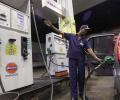
Petrol and diesel prices are likely to be hiked this week as oil companies prepare to pare losses accumulated from keeping rates steady for over four months in the run-up to assembly elections in five states, including UP, despite international oil prices jumping to a 13-year high of $140 per barrel. West Texas Intermediate crude futures, the US oil benchmark, rose to $130.50 per barrel on Sunday evening, its highest since July 2008, before retreating. The international benchmark, Brent crude, hit a high of $139.13 at one point overnight, also its highest since July 2008.

There is positive correlation between crude oil prices and Indian equities and investors can expect more upside after the recent rally in Brent crude price.

Overall, the Brazil, Russia, India, China and South Africa gap has widened as developed economies are taking the lead.

From the 30-share pack, Hindustan Unilever, Tata Motors, Axis Bank, Nestle India, Asian Paints, ITC, Reliance Industries, Mahindra & Mahindra, IndusInd Bank and State Bank of India were among the laggards. Larsen & Toubro, Tata Steel, JSW Steel, HDFC Bank, Adani Ports, Kotak Mahindra Bank, Bharti Airtel and PowerGrid were among the gainers.

In 13 hikes, petrol price has gone up by Rs 7.11 per litre and diesel by Rs 7.67 a litre.

'It won't be a V-shaped recovery. It'll be consolidation.' 'Investors might exit during that grind. It'll be painful.'

Oil imports are a third of India's total import bill.

Dabur's performance in the July-September quarter of the current financial year (Q2FY25) was weak but in line with consensus. Consolidated revenue declined 5 per cent year-on-year (Y-o-Y) due to a temporary adjustment in General Trade (GT) inventory. Indian revenue declined 7.6 per cent, while international business grew 13 per cent Y-o-Y in constant currency (CC) terms.

Wheat, rice and edible oil prices have begun moving down from their past highs, as farmers continue to expand area under these crops in response to high prices. Speculators worldwide are now betting on falling prices.

With India making it clear that the US doesn't have enough spare capacity for crude oil, Washington, DC, now wants India to sign fixed-term liquefied natural gas (LNG) contracts with American producers, multiple sources in the know said.
Essar Oil has decided to cut petrol and diesel prices in the range 50 paise to Rs 2.50 per litre effective from July 16.

Oil prices have declined by more than 60 per cent since January with benchmark crude falling well below $30 per barrel, driven by an acute oil demand decline caused by the coronavirus and a lack of production cuts by OPEC and other oil producing countries.

Corporate earnings got a big boost from the fall in commodity and energy prices in July-September 2023 (Q2FY24) despite a slowdown in revenue growth during the quarter. The combined net profits of 3,123 firms that have declared their results so far were up 38 per cent year-on-year (Y-o-Y) to Rs 3.07 trillion in Q2FY24, up from Rs 2.24 trillion a year ago. Earnings were, however, down 3.5 per cent on a sequential basis from Rs 3.18 trillion in April-June (Q1) FY24.
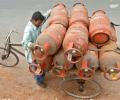
Since international oil prices have fallen, the government's subsidy payout will fall by almost Rs 50 per cylinder to Rs 240.

Despite the crash in crude oil prices, Indians still pay a high price for petrol.
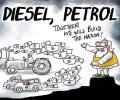
The government on Wednesday scrapped a week-old tax on the export of petrol and cut windfall taxes on overseas shipment of diesel and ATF as well as the one imposed on domestically produced crude oil after global oil prices fell. While the Rs 6 a litre export duty on petrol was scrapped, the tax on the export of diesel and jet fuel (ATF) was cut by Rs 2 per litre each to Rs 11 and Rs 4 respectively, government notifications showed. The tax on domestically produced crude was also cut to Rs 17,000 per tonne from Rs 23,250, a move that will benefit producers like ONGC and Vedanta Ltd.

Major laggards among Sensex constituents included Bharti Airtel, Hindustan Unilever, Tata Steel and ITC. Power Grid, UltraTech Cement, NTPC and Titan emerged as winners.

The prospect of protracted uncertainties in the global economic landscape not only pose a risk for India's growth outlook in 2025-26, but are also likely to dent the private sector's capital raising and investment plans, the finance ministry averred on Tuesday, cautioning the country's corporates that the era of 'easy pickings' was over.
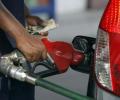
Petrol and diesel prices, which have been on a freeze for the past four months in view of assembly elections in states like Uttar Pradesh, need to be increased by over Rs 12 per litre by March 16 for fuel retailers to break even. International crude oil prices shot above $120 a barrel for the first time in nine years on Thursday before retreating a little to $111 on Friday, but the gulf between cost and retail rates has only widened. With international oil prices - on which domestic fuel retails are directly benchmarked - spiking in the last two months, state-owned fuel retailers "need a massive price hike of Rs 12.1 per litre on or before March 16, 2022, just to breakeven and a price hike of Rs 15.1 is required" after including margins for oil firms, ICICI Securities said in a report.

However, copious oil supplies amid growing global output and slowing Chinese oil consumption will put India in a better bargaining position with Gulf suppliers.

'There are very few issues and a political call needs to be taken about some of them.'

Retail inflation in August rose slightly to 2.07 per cent from 1.61 per cent in the preceding month, mainly due to increase in prices of vegetables, meat and fish, according to a government data released on Friday.
Margins for the oil refining and retailing sector have moved off their peaks, and the average integrated margins (refining plus marketing) for oil marketing companies (OMCs) have normalised. The ascent in crude oil prices, combined with static retail prices, has depressed marketing margins for diesel and petrol. However, the fall in marketing margins has been offset by increased gross refining margins (GRMs).

The rupee depreciated 7 paise to an all-time low of 80.05 against the US dollar in early trade on Tuesday tracking the strength of the American currency and firm crude oil prices. At the interbank foreign exchange, the rupee opened at 80 against the American dollar, then lost ground to quote at 80.05, registering a fall of 7 paise from the last close. In initial trade, the local unit also touched 79.90 against the American currency.

The NSE Nifty after shuttling between 10,397.60 and 10,279.35 points, ended 47 points, or 0.45 per cent lower at 10,301.05.

Petrol and diesel prices are likely to be cut by close to Re 1 per litre this weekend on sliding global oil rates.
Oil marketing cos rightly passed on the burden to buyers.

Jet fuel prices on Wednesday were hiked by over 18 per cent -- the steepest ever increase -- to all-time high levels after international oil price surged to a multi-year high.
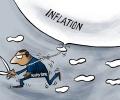
'Deposit and lending rates have started to fall considerably. It is likely to spur investment and consumption of durables.'
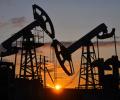
Reliance Industries' refining earnings will remain steady, supported by its position as India's largest importer of Russian crude and favourable global supplies, according to analysts at JM Financial and Goldman Sachs. Reliance imported more Russian barrels than any other Indian refiner in the past eight months, according to data from Bloomberg/Kpler.

From the Sensex pack, IndusInd Bank, Infosys, Bajaj Finserv, Mahindra & Mahindra, Zomato, Hindustan Unilever, Power Grid, Axis Bank, UltraTech Cement, Adani Ports, and Tata Consultancy Services were among the laggards. On the other hand, Sun Pharmaceuticals, ICICI Bank, Bharti Airtel, HCL Technologies, Maruti Suzuki India, Larsen & Toubro, Reliance Industries, Kotak Mahindra Bank and Titan were the gainers.

Equity benchmarks declined on Tuesday after a three-day rally, with the Sensex falling 359.33 points amid selling in index majors HDFC, Reliance Industries and Infosys. Investors were cautious ahead of release of GDP data, while a jump in crude oil prices also weighed on market sentiment, traders said. The 30-share BSE Sensex went lower by 359.33 points or 0.64 per cent to settle at 55,566.41.
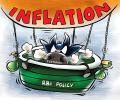
Retail inflation slipped to seven-month low of 3.61 per cent in February mainly due to easing prices of vegetables, eggs, and other protein-rich items, creating space for the RBI to go for another cut in interest rate next month.

The Reserve Bank on Wednesday projected retail inflation to ease to 5.3 per cent in next fiscal from 6.5 per cent this year on assumptions of lower imported inflation, even though core inflation remains sticky. The RBI's inflation outlook for current fiscal has improved from 6.8 per cent projected earlier, to 6.5 per cent, on the back of steeper than expected decline in vegetable prices and Indian basket of crude at $95 a barrel. "Looking ahead, while inflation is expected to moderate in 2023-24, it is likely to rule above the 4 per cent target.

Over the previous eight sessions, Brent had lost about $7 a barrel, almost 20 per cent

Retail inflation dipped marginally to a nearly six-year low of 3.34 per cent in March due to a decline in prices of vegetables and protein-rich items. The Consumer Price Index (CPI) based inflation was 3.61 per cent in February and 4.85 per cent in March last year.

Analysts are enthused by BPCL's upstream foray and have re-rated the stock in the past couple of years.
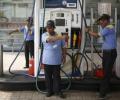
CARE Ratings, in a report, said it foresees an increase in the retail prices of petrol and diesel in the coming few days, depending on how the oil markets react in the reduction in supply from the cartel.
While prices sustaining lower levels is crucial, Govt actions are also a key monitorable given the forthcoming elections in 2024.
